The Three Tiers of Needs Assessments
11/17/25 / Beth Mulligan


Photo by Element5 Digital on Unsplash
Conducting a community needs assessment is often the first step in a process to create a strategic plan or action plan (or strategic action plan) that will outline where and how to focus resources and efforts toward a particular outcome.
For 26 years, we have helped communities gather information about key needs in their local area. Our needs assessments have been used to help local governments and nonprofit organizations develop and support programs to alleviate the causes and conditions of poverty in their local area, improve juvenile justice programs, identify health care priorities, and target investments in parks and recreation, just to name a few.
The size of the needs assessment often scales to the size of the investment to be made in solutions, as, reasonably, a greater degree of precision is desirable before investing a lot of money and time.
We are known for our practical approach and actionable results. We have honed our process based on our wealth of experience studying a variety of topics across a wide range of communities. Below we share our breakdown of different tiers of needs assessments.
Tier 1: Utilizing existing data only
At the smaller end of the spectrum, a needs assessment may be conducted by gathering and analyzing only secondary data that is available about the community. Often secondary data sources can be very helpful in getting a sense of the scale of the problem. For example, existing federal and state databases can answer questions like these:
- What is the graduation rate at your local high school?
- What is the crime rate among adolescents?
- What are the top causes of injury or death?
- How many families in your community are living below the poverty line or are housing cost burdened?
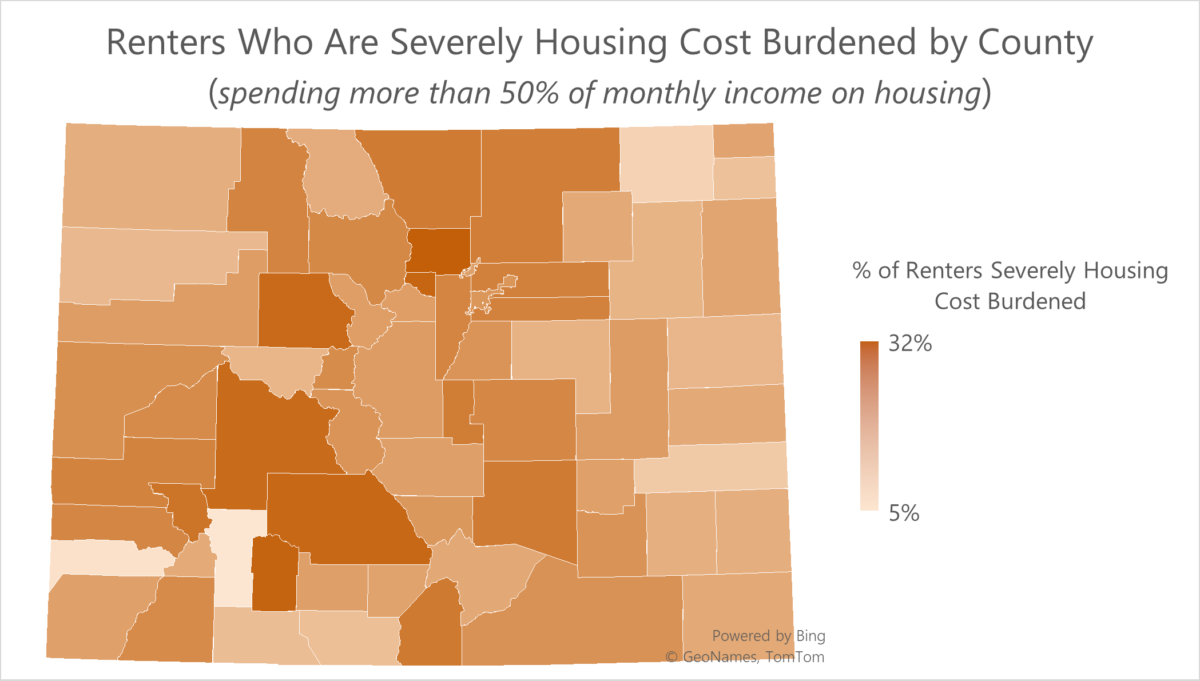
It may be possible to further segment this data by demographic characteristics. While the scale of secondary data analysis that is possible can vary widely by topic and community size, often something useful can be put together for a budget in the $5,000-$7,000 range.
Tier 2: Expert interviews
The next way to level-up a needs assessment is to conduct and analyze key person interviews. “Key people” vary, but are often those who have personal experience of the topic through their professional role or in their personal life. This may include human services providers or recipients, doctors or patients, law enforcement officers or youth with juvenile justice involvement, parks workers or trail users. It is important to first put together a list of people or roles who might be able to paint a picture of how the problem manifests within the community in question, describe existing services and their limitations, and identify potential solutions.
A needs assessment combining secondary data analysis with a small, but rigorous key person interview process to a needs assessment would start around $15,000-$20,000, and could be more if the problem is particularly complex and there are a lot of key people to include. In some communities, small focus groups with various types of key people may be more feasible than individual interviews.
Tier 3: Full community involvement
Many community-level initiatives, especially those where a county or municipal government is deciding how to spend taxpayer dollars to solve a problem, will require a more comprehensive assessment that also includes a community survey, focus groups, and one or more prioritization sessions that may be open to the public or focused on decision makers.
A community survey for this purpose will typically need to be scientifically rigorous to withstand scrutiny, especially if the topic is at all contentious. In this case an open-link questionnaire posted to the government’s website or social media page will not suffice, as that distribution method typically only reaches the most engaged citizens. Rather, a representative sample survey of sufficient size will need to be conducted by a reputable third party. Often focus groups will be conducted following the survey to further explore common understandings and rationales underlying key attitudes and beliefs that affect what solutions are politically palatable in the community.
Finally, prioritization sessions can be held to review data gathered in the needs assessment and evaluate potential options for focus based on important criteria such as how many people would benefit from a particular option, how much benefit each person would experience, how many resources currently exist for a particular option, what other funding sources may exist for a particular option, and so on. A needs assessment incorporating all of the above elements (secondary data analysis, key person interviews, a community survey, focus groups, and prioritization process) would start around $40,000 and could run well higher than $100,000 depending on the specifics.
Conducting a needs assessment internally vs. hiring outside help
Communities, now more than ever perhaps, are facing budget uncertainty and the available funds for contracting out a needs assessment may be limited. Our best advice, if you’re seeking outside assistance, is to be upfront with your budget. A good consultant can help you prioritize the most important tasks and may identify tasks that you could take on internally. In terms of taking on an assessment internally, Tier 1 tasks will generally be more manageable, assuming you have the in-house data analysis expertise. As you move up in tiers, not only does the workload increase but so to the possible influence of staff doing the primary data collection. Oftentimes, key stakeholders, residents, etc. will open up more if a third party is collecting and aggregating their feedback. Ensuring confidentiality (and observance of various data privacy regulations) will be key in gathering honest feedback.
If you want to discuss your needs assessment, get in touch here. We’re always happy to chat.