Corona’s Coaching Accelerates Conservation Impact
3/18/26 / Paul Collier

While we love rolling up our sleeves to collect, analyze, and report data, we get just as much joy from equipping teams to do this critical work themselves. Recently, we were hired by the Peregrine Accelerator for Conservation Impact, a social enterprise accelerator run by Colorado State University, to serve as evaluation trainers for their 2025 cohort. The 2025 Peregrine cohort consisted of eight conservation-focused projects aimed at improving the ecosystems of the North Atlantic Transboundary Landscape, on the border between the Northeastern United States and Quebec. Many of these projects focused on integrating wisdom and perspectives held by First Nations people into existing conservation efforts.
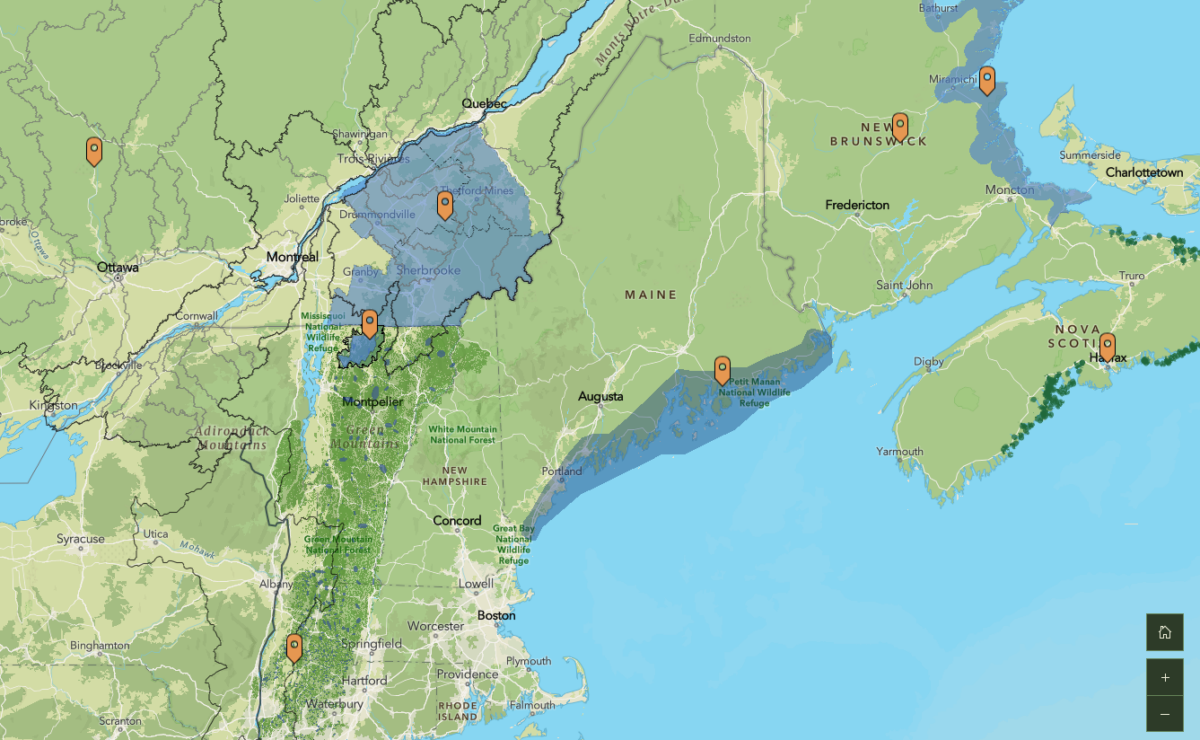
Map of the Transatlantic Boundary Area, Source: Peregrine Accelerator
We facilitated workshops helping each team create their theory of change and draft an evaluation plan to collect qualitative and quantitative data on their project’s impact. Several of the teams created strong visuals representing their theory of change, including the Housatonic Valley Association and Cold Hollow to Canada. While we used curricula we have developed from working with many domestic nonprofits, we adapted our approach to match the maturity of each project, integrate indigenous evaluation principles, and tie into topics covered by other accelerator program trainers. We set up homework assignments for each session and provided individualized feedback on team submissions through email and one-on-one conversations with each team.
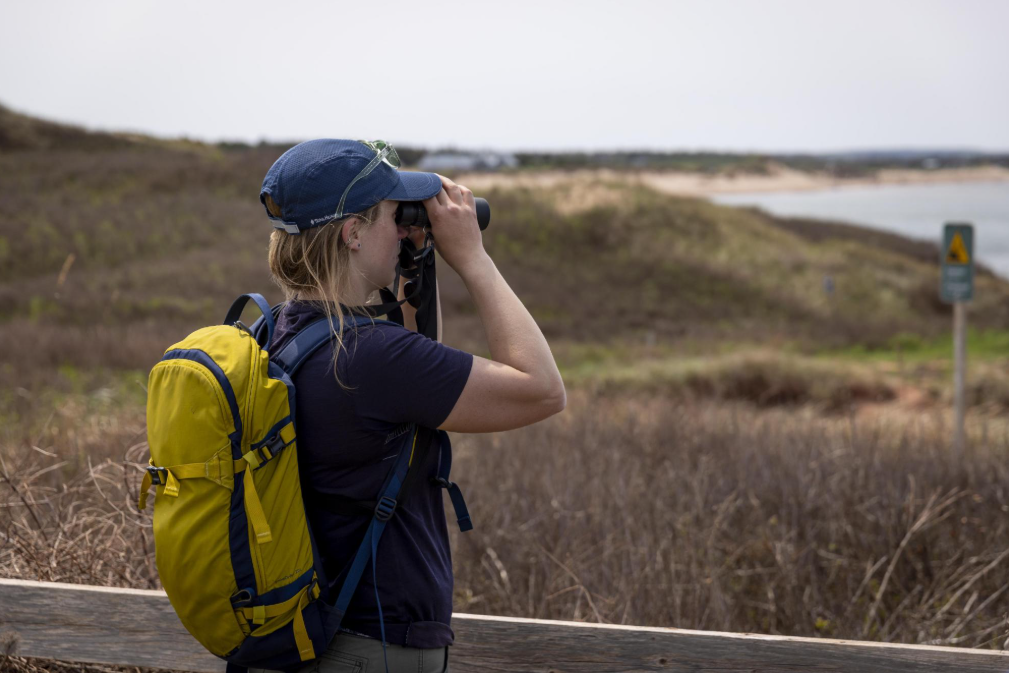
Peregrine Accelerator participant at their kickoff gathering at Prince Edward Island
photo credit: Power Button Media
When our role in the program was complete, we also worked with Peregrine Accelerator staff to help them identify common outcome metrics across organizations so the accelerator can communicate its collective impact. Check out their wrap-up memo to learn more about this accelerator and these eight innovative conservation projects.