Corona’s Evaluation Helps CASA Communicate Impact
2/20/26 / Catherine Rockey, PhD

At Corona Insights, our work doesn’t end when a report is delivered. Research and evaluation findings frequently become the foundation for our clients’ fundraising appeals, public communications, and advocacy efforts, providing organizations with the credible, independent evidence they need to make their case to donors, policymakers, and the communities they serve. In this post we will highlight a recent project where our work is taking on a life beyond the report. (See Jim’s recent post about our work with Juntos Community for another excellent example!)
In 2025, Colorado CASA engaged Corona Insights to conduct a statewide evaluation of its network of 18 local organizations. Colorado CASA wanted an independent, rigorous assessment of the network’s impact that is credible for donors, legislators, and the public, and describes what this volunteer-driven model accomplishes for children and families touched by the child welfare system.
To carry out the evaluation, we audited program data collected by all 18 local organizations and conducted 34 in-depth interviews with CASA leaders, judges, child welfare professionals, parents, and youth with direct experience in the system. We used this information to revise the CASA network’s theory of change (shown below) so that it tells a clear and comprehensive story about the strategies CASA network organizations employ across the state. Then we aggregated program output data and analyzed Child Wellbeing Assessments to document CASA network outputs and outcomes.
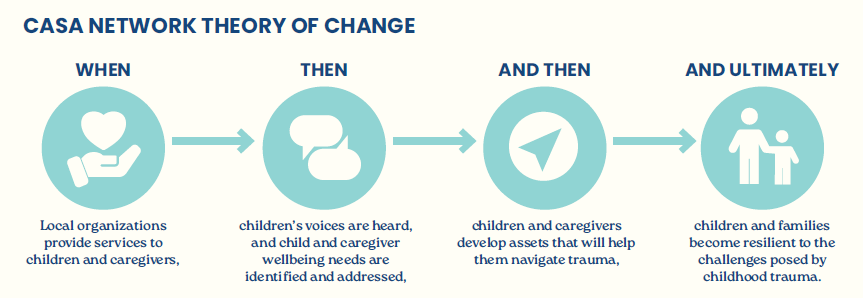
Graphic of the Theory of Change created for Colorado CASA
The findings tell a compelling story: With a combined annual budget of just over $18 million (just a fraction of the $623 million allocated to the Colorado Division of Child Welfare), the CASA network engaged more than 2,000 volunteers and supported over 7,000 community members across the state in FY 24/25. The data showed while many children in the child welfare system generally experience significant health and safety challenges, 83% of children with a CASA volunteer maintain or improve their health access, 80% maintain or improve in the safety of their living situation, and 73% maintain or improve in terms of developmental milestones. Interviews reinforced the assessment data, revealing that local CASA organizations function both as advocates for individual children and as connective hubs linking at-risk families to child welfare professionals and community resources. Many local organizations have even expanded their programming to fill gaps the broader service ecosystem has been unable to address.
The evaluation culminated in a full report and a two-page public-facing summary. Colorado CASA has since shared these materials with their statewide network of funders and volunteers through a virtual lunch-and-learn, on their blog, through their newsletter, and in ongoing discussions with Colorado’s legislators.