Literature Reviews: Standing on the Shoulders of Giants!
8/26/25 / Matt Bruce

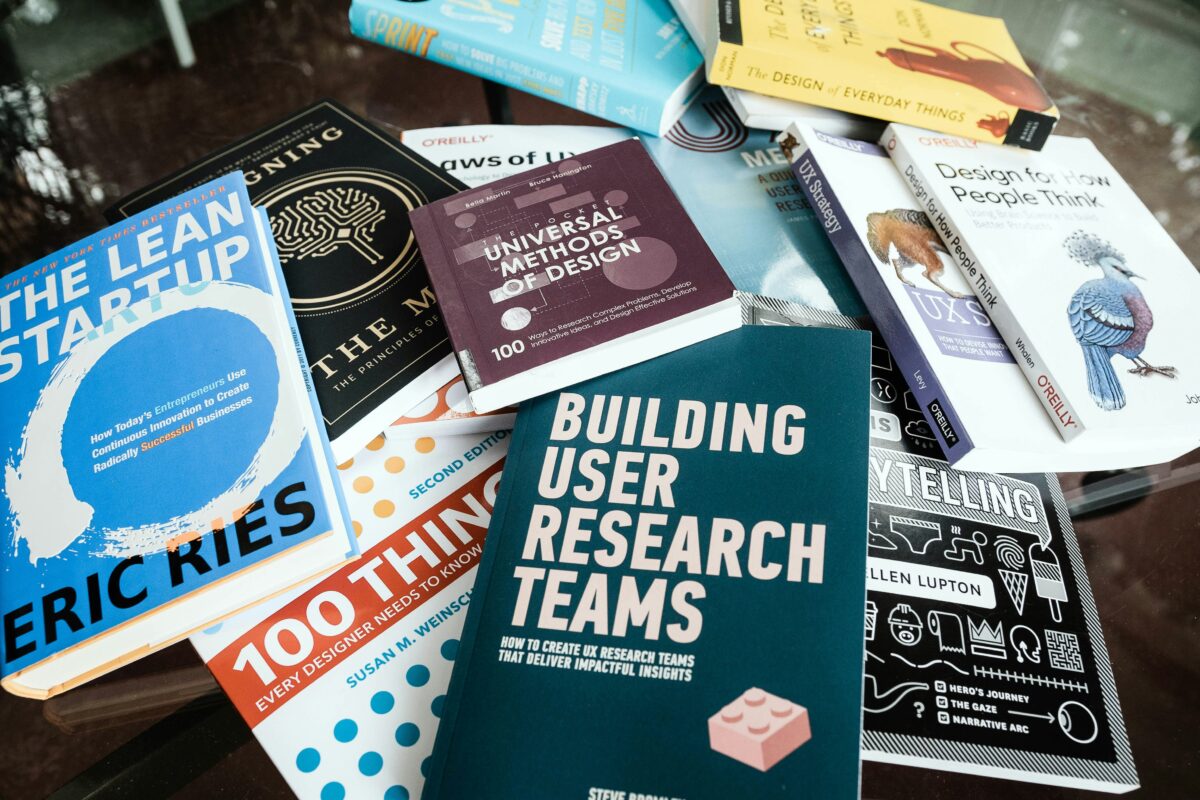
Photo by Karl Solano on Unsplash
There are tens of thousands of research, trade, and academic journal articles published each year across hundreds of disciplines. One way that we can effectively and efficiently gain insights on any subject is to review other research studies and reports. We call this a literature review, and it is a cost-effective step in the research process. Sometimes a literature review can be done in place of research, but more often it can help us conduct deeper, higher quality research. This blog provides a few examples of how we have used or can use existing research to stretch our clients’ research budgets a little further.
Answer a Key Research Question
Learning the results from previous research studies is one of the most obvious benefits of a literature review. Sometimes, a key research question has already been answered, so we can avoid the expense of collecting new data. Or finding this out early can allow us to shift our research to exploring new questions that we don’t yet know the answer. For example, in one literature review, we found that altruism was a common value-orientation for people who sign up to be organ donors. Knowing this early in the research process allowed us to focus our exploration on more specific questions.
Idea Generation
A broad review of prior studies and relevant articles can elicit new ideas. These could be new methodological approaches, new experiments, emerging concepts and theories, or new hypotheses to test. Starting with a long list of ideas is a great foundation for brainstorming new research questions, finding solutions to methodological challenges, or creating marketing messages to test.
Methodology Lessons and Optimization
To a researcher, there is nothing better than reading a descriptive methodology section of a research report, especially if the research took a novel approach or had an unexpected outcome. I remember reading a report about several focus groups that were conducted to explore a sensitive topic. It was important that this research was conducted in a group setting, but the authors were concerned that a group of strangers would be too uncomfortable to share their honest opinions. So they found and recruited naturally occurring but completely unrelated groups such as people on sports teams, people in professional networking organizations, and members of a club. Reading about this novel approach helped us begin to think about how to optimize our own focus group recruiting.
On the quantitative side, we have also reviewed prior survey reports to help gauge potential response rate ranges, especially for subgroups that might respond at lower frequencies. Knowing ahead of time who might be less likely to participate in a survey allows us to invite more of that population to partake in the research, which can increase representation in the results. By reviewing prior research, we are able to collect higher quality data through better recruiting and higher response rates.
Valid Measures
Social science research can be challenging because we are often trying to explore, define, and measure complicated concepts such as attitudes, resilience, trust, vulnerability, and so much more. Accurately measuring these messy concepts takes a lot of testing, trial and error, and eventually validation. We often look to prior research for tested and validated ways of measuring key concepts on a survey. While we don’t always use these measures exactly, it allows us to proceed with more confidence when designing a questionnaire. Again, the prior research helps us collect higher quality data.
I hope these ideas encourage you to invest at least a small amount of a research budget into a literature review; it can benefit subsequent research in multiple ways.